


Introduction
Waste management is one of the most important things to think about in the modern world since it has a direct impact on people’s health, the environment, and the economy. The amount of trash made every day is going up quickly since more people are living in cities and buying more things. It is now a global need to handle this trash in a responsible and long-lasting way, not just a local one. Taking care of trash is more than just picking it up and throwing it away. It also means planning, processing, recycling, and cutting down on trash to protect the environment and make life better.
Waste management is the process of collecting, moving, processing, recycling, and getting rid of waste. These materials can come from homes, businesses, hospitals, farms, building sites, and other places of business. Good waste management helps keep the environment clean, lowers health hazards, protects natural resources, and supports long-term growth. If there aren’t the right mechanisms in place, trash can build up, pollute land and water, generate dangerous gases, and cause major health problems for the population.
Getting to Know Waste Management
Waste management is a planned way to deal with trash from the time it is made until it is thrown away. It has a lot of steps, such making garbage, sorting it, collecting it, moving it, treating it, and getting rid of it. Every step is vital to make sure that trash doesn’t hurt people or the environment.
There are various methods to group waste based on where it came from, what it’s made of, and how it could affect things. Some common types are biological waste, electronic waste, solid trash, liquid waste, and hazardous waste. Food leftovers, packing materials, and trash from the home are all examples of solid waste. Wastewater is the most common type of liquid waste that originates from homes and businesses. Hazardous waste has things in it that are poisonous, combustible, or corrosive. Biomedical trash comes from hospitals and other health care facilities, while electronic waste is made up of old technological gadgets that are no longer needed.
The goal of good waste management is to cut down on the amount of garbage created and increase the amount that can be recovered through reuse and recycling. This method puts less stress on landfills and makes human activities less harmful to the environment.
The Importance of Waste Management in Today’s World

In today’s world, waste management is quite important. If you don’t handle waste properly, it can hurt the environment and your health. When trash is thrown away in the open or burned without care, it lets dangerous chemicals and gasses into the air, soil, and water.
Protecting the environment is one of the best things about trash management. If you throw away and treat your trash correctly, you can keep the soil and water clean. This helps keep ecosystems healthy and keeps animals safe. Waste management is particularly important for lowering greenhouse gas emissions, notably methane, which comes from landfills and makes climate change worse.
Another crucial thing is public health. Waste that builds up can attract insects, rats, and germs that cause sickness. Good waste management lowers the risk of diseases and makes communities cleaner.
Taking care of trash also helps the economy flourish. The recycling and trash processing businesses create jobs and encourage people to use resources wisely. Countries can cut their production costs and reliance on raw material extraction by recovering elements from waste.
Different kinds of trash that waste management systems deal with
trash management systems deal with many kinds of trash, and each kind needs to be handled and treated in a different way. Knowing these kinds of garbage might help you come up with good plans on how to deal with it.
Food, paper, plastic, glass, and metal goods that people throw away at home are all examples of household trash. A lot of municipal solid garbage is made up of this kind of waste. Manufacturing and production activities create industrial waste, which can include chemicals, scrap materials, and byproducts. Crop leftovers, animal waste, and unneeded fertilizers or pesticides are all examples of agricultural waste.
Hospitals, clinics, and labs make biomedical waste. It has used syringes, bandages, medical equipment, and biological materials in it. Old computers, cell phones, TVs, and other electronic gadgets that are no longer useful are examples of electronic waste. This kind of garbage has valuable metals in it, but it also has dangerous chemicals that need to be handled with care.
Important Ways to Handle Waste
There are many ways to safely and effectively handle and get rid of waste as part of waste management. The type and amount of trash, environmental rules, and the infrastructure that is already in place all play a role in choosing these approaches.
Landfilling is a very frequent way to deal with trash. In this process, trash is put in landfills, which are special places where it is compacted and covered with dirt. To lessen their effect on the environment, modern landfills have protective liners and devices for collecting gas. But landfills need a lot of space and might pose long-term environmental problems if they aren’t taken care of.
Recycling is a popular way to deal with trash that turns trash into new things. Recycling helps keep natural resources safe, saves energy, and cuts down on pollution. You can recycle things like paper, plastic, glass, and metals many times.
Composting is a natural way to get rid of organic waste, like food leftovers and yard debris. Composting turns organic waste into compost that is full of nutrients and may be used to make soil better. Composting cuts down on trash in landfills and helps farming that is good for the environment.
Incineration is a way to get rid of trash by burning it at very high temperatures. This procedure makes less trash and can make energy. But incineration needs to be closely watched to avoid releasing harmful chemicals and polluting the air.
The Waste Management Hierarchy and What It Does
The waste management hierarchy is a set of rules that tells people how to handle garbage based on how it affects the environment. It puts stopping waste and getting resources back before throwing things away. The hierarchy says that you should try to reduce waste, reuse items, and recycle before you think about throwing things away.
The best way to cut down on trash is at the source, since this cuts down on the requirement for treatment and disposal. Reusing things makes them last longer and cuts down on the need for fresh resources. Recycling gets materials back and hurts the environment less. Landfilling and incineration are both forms of disposal, and they are both seen as the last resort.
Following the waste management hierarchy can help governments, corporations, and people make better choices that are better for the environment.
How Waste Management Helps Protect the Environment
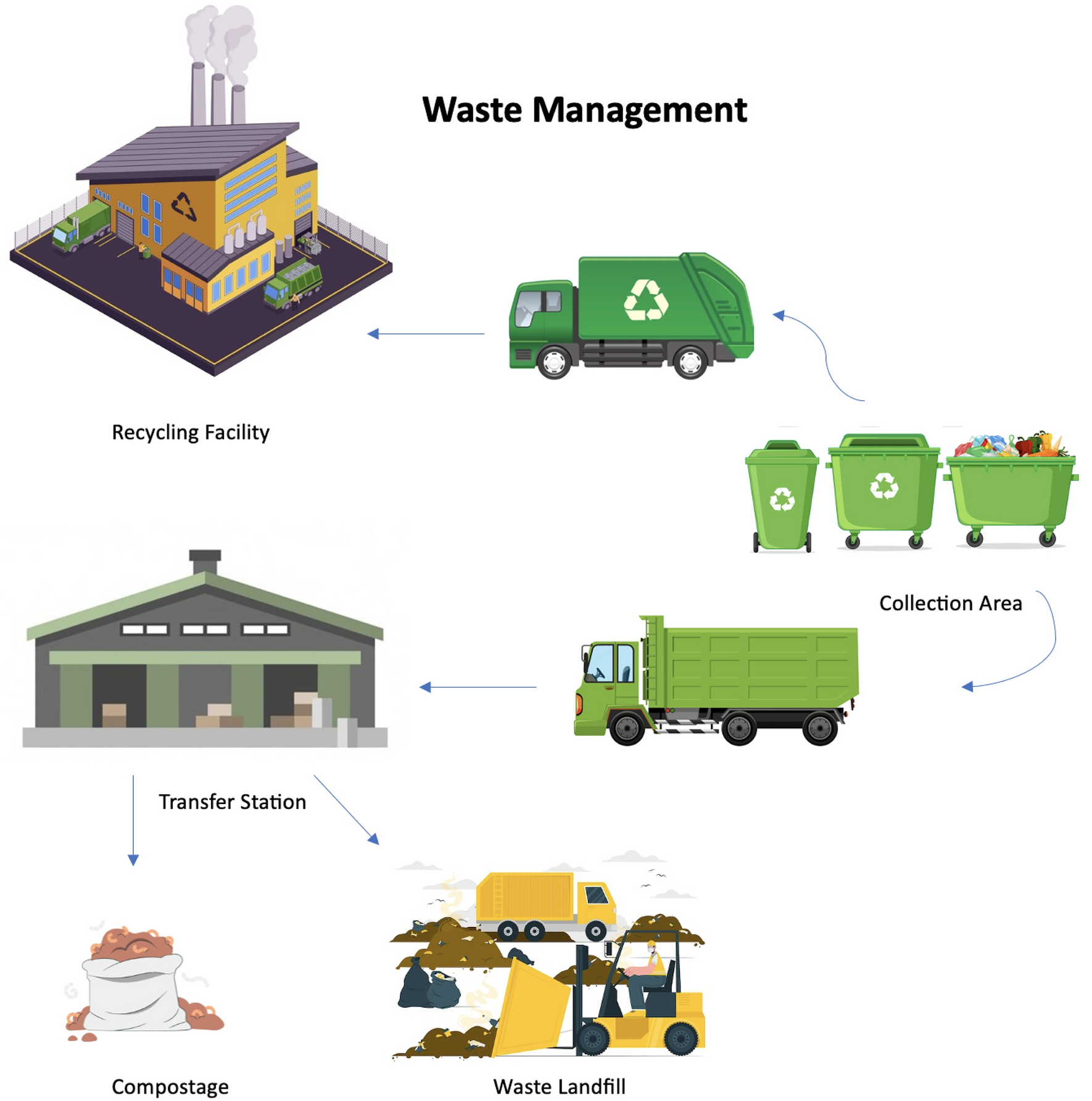
Waste management is very important for keeping the environment safe from pollution and resource loss. If you handle garbage properly, you can keep dangerous chemicals out of the soil, water, and air.
Proper waste management lowers the amount of greenhouse gases that are released into the air and helps fight climate change. Recycling and composting cut down on the need to get raw materials and use less energy. This helps protect natural resources including water, minerals, and forests.
Taking care of waste also helps maintain biodiversity. Throwing away trash in the wrong way can hurt wildlife and destroy habitats. By managing garbage, ecosystems can stay healthy and balanced.
Managing waste in cities and the countryside
garbage management systems are very different in cities and rural locations because of differences in population density, infrastructure, and how garbage is made. Every day, cities produce a lot of trash, so they need coordinated methods for collecting and treating it. Municipalities frequently handle trash collection by using scheduled services and central facilities.
Rural places make less trash, but they may not have the right infrastructure to handle it. In some rural areas, people often dump trash and burn it, which is bad for the environment and people’s health. To improve waste management in rural regions, people need to be aware of the problem, get involved, and use the right technologies.
Integrated waste management strategies that take into account local variables can make things work better in both cities and the country.
Problems with managing waste
Waste management is really important, yet it has a lot of problems all around the world. The amount of waste has grown too big for the current systems because of rapid population development and urbanization. There are other problems because there isn’t enough area for landfills and the expense of treating waste is considerable.
Another big problem is that not enough people know about or are involved in the process. Not separating waste properly at the source makes recycling and composting operations less effective. Poor waste management can also happen when rules and enforcement aren’t strong enough.
It is hard for developing areas to set up advanced waste management systems because of money and technology problems. Governments, businesses, and communities all need to work together to solve these problems.
The part that technology plays in modern waste management
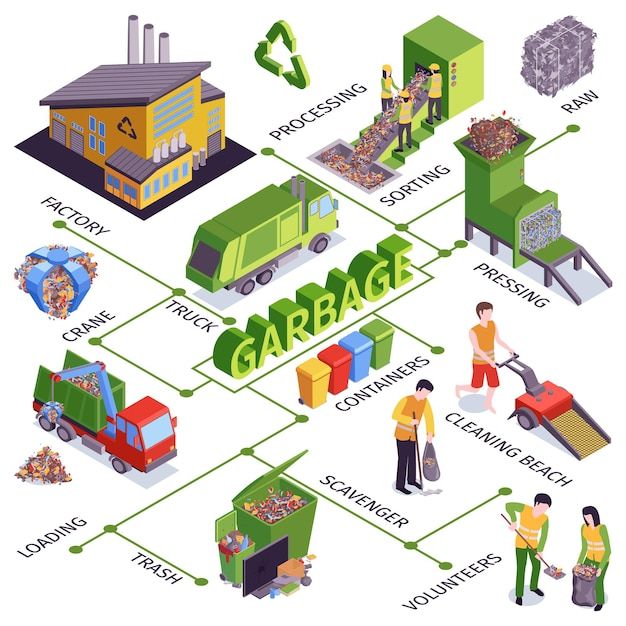
Technology is now a necessary aspect of how we deal with trash in the modern world. Sensors and automation are used in advanced sorting systems to quickly and accurately separate recyclable materials. Waste-to-energy technologies turn trash into electricity or heat, which means we don’t have to rely on landfills as much.
Digital solutions like trash tracking systems and data analytics help governments keep an eye on how much rubbish is being made and find the best ways to collect it. These technologies make things work better and cost less to run.
New waste management technologies are always being developed, which makes it easier to deal with complicated waste streams and makes the environment more sustainable.
Sustainable Development and Waste Management
Waste management is strongly related to sustainable development since it helps the economy thrive, protects the environment, and improves people’s health. Sustainable waste management strategies cut down on pollution, save resources, and make jobs.
Communities can get long-term benefits by include trash management in their plans for development. Sustainable waste management also encourages responsible patterns of production and consumption, which are necessary for reaching global sustainability goals.
Teaching people about sustainable trash management and making them aware of it are very important. People are more likely to do the right thing when they know how trash affects the ecosystem.
A look at some common ways to handle waste
The table below makes it easy to compare common waste management strategies so you can see how they work and what they do.
| Waste Management Method | Main Purpose | Environmental Impact | Suitability |
|---|---|---|---|
| Landfilling | Disposal of waste | Risk of soil and water pollution | Large-scale waste disposal |
| Recycling | Resource recovery | Reduces pollution and saves energy | Recyclable materials |
| Composting | Organic waste treatment | Improves soil health | Food and garden waste |
| Incineration | Volume reduction and energy | Air pollution if uncontrolled | Non-recyclable waste |
Community Involvement in Waste Management
To manage garbage well, everyone in the community needs to be involved. People are very important when it comes to separating, reducing, and throwing away trash in a responsible way. Waste management systems work better and last longer when communities get involved.
People can learn about the benefits of trash management and be encouraged to do the right thing through public awareness programs. Schools, clubs in the community, and other institutions can help create a culture of accountability.
Working together, local governments and communities may find and put into action effective ways to deal with local waste management problems.
Policies of the government and trash management
Government policies are very important for how garbage is handled. There are rules on how to throw away trash, goals for recycling, and standards for the environment that make sure trash is handled properly. Policies can also help new ideas and money flow into waste management infrastructure.
To be effective, policies need to be monitored, enforced, and made public. Incentives, subsidies, and capacity-building initiatives are some ways that governments can help with trash management.
Good governance and clear rules make it possible to manage waste and protect the environment in a way that lasts.
The Future of Waste Management
Sustainability, innovation, and the principles of a circular economy are the main goals for the future of garbage management. Future systems want to treat garbage as a useful resource instead of a problem.
Circular economy strategies encourage making items that can be reused, fixed, or recycled. This cuts down on waste and makes the best use of resources. Technology will keep becoming better at separating trash, recycling, and getting energy back from it.
To solve problems with waste management, people around the world need to be aware of them and work together. By using sustainable methods and putting money into new ideas, communities may make the world a cleaner and healthier place for future generations.
Conclusion
Waste management is an important part of modern life that impacts the health of the environment, public safety, and the economy. Planning ahead, acting responsibly, and using the right technologies are all important parts of good waste management. Individuals and groups may safeguard the environment, cut down on pollution, and save resources by learning about the importance of waste management and using eco-friendly methods.