


Introduction
Change management is a planned way for companies to get people, teams, and whole businesses from where they are now to where they want to be in the future. Businesses are always dealing with new technology, market demands, customer expectations, and competition in today’s fast-paced world. Even well-planned projects can fail if there isn’t a good way to handle change. Change management helps people accept new things more easily, lowers resistance, and makes sure that organizational goals are met smoothly.
Change management is all about how people deal with change. People need time, communication, and help to become used to changes, even though systems, procedures, and technologies can be updated very fast. A comprehensive plan for managing change makes sure that workers know why things are changing, how it will effect them, and what is expected of them.
Getting to Know the Idea of Change Management
Change management is not just one thing or occurrence. It is an ongoing process that begins when a change is recognized and ends when the change is fully embraced and maintained. It brings together planning, communication, training, leadership, and monitoring to make sure the change is successful.
There are several ways that organizations might transform. It could include adding new software, changing the way teams are set up, combining with another company, changing the way executives work, or changing the way the business works. Every kind of change makes things less certain, and less certain things often lead to resistance. Change management gives you a technique to deal with this resistance in a positive way.
The major goal of change management is to make sure that people are ready, willing, and able to operate in the new way when the change is made. When done right, it cuts down on problems and boosts performance.
Why change management is important
Change is a part of life in today’s businesses. Companies that don’t change typically have a hard time staying in business. Change management is crucial because it makes it more likely that changes will work.
One important reason is that it gets employees involved. People are more inclined to support a change if they know why it is happening and feel like they are a part of it. This makes people feel better and work harder.
Different kinds of changes in organizations
There are several sorts of organizational change, depending on how big and important it is. Leaders can pick the best way to handle change by knowing these sorts.
Incremental change means making incremental, progressive changes over time. These changes are usually easier to deal with and don’t cause as much trouble. Some examples are small changes to processes or updates to policies.
Transformational transformation is a big shift that has a big effect on how an organization works. It could involve a change in the company’s culture, a substantial restructure, or a digital revolution. This kind of transformation needs strong leadership and a lot of work on managing the change.
The Process of Managing Change
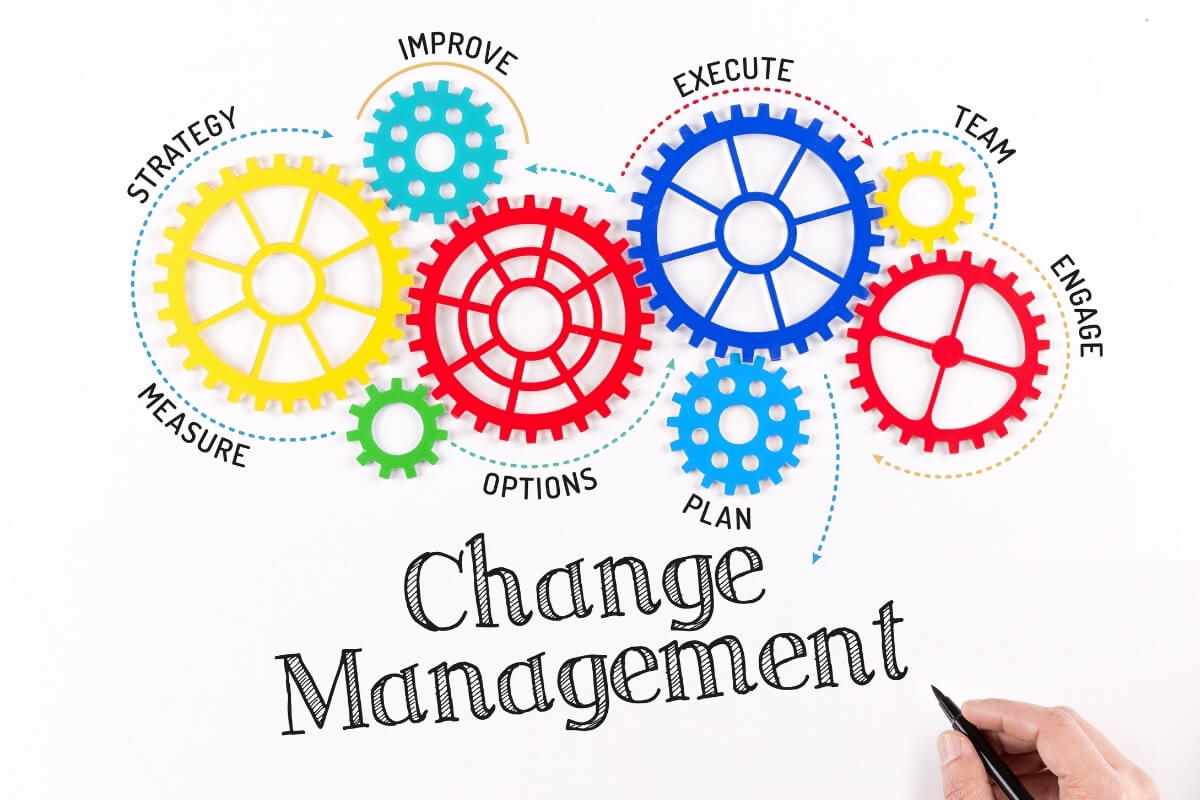
The change management process gives you an organized strategy to plan and carry out changes. Even though models can be different, the main procedures are usually the same in most cases.
The first step in the process is to figure out why change is needed. This means looking at both internal and external causes that make the organization need to change. At this point, clear goals should be set.
The next step is to plan the change. This entails making a clear plan, finding stakeholders, figuring out what dangers there are, and giving out resources. A solid plan is the first step to success.
Communication is a big part of the whole process. Employees need to hear clear and consistent messaging about what is happening, why it is changing, and how it will effect them. Talking openly with each other increases trust and lowers doubt.
Implementation is the step where the change actually happens. During this time, training, support, and leadership involvement are very important to help employees make the switch seamlessly.
Models of Change Management That Are Well-Known
Many change management models have been produced over the years to help businesses deal with change. Each model has a different point of view, but they all want to help people adapt change successfully.
A well-known model looks at awareness, desire, knowledge, ability, and reinforcement. This paradigm stresses the need for personal change and the relevance of dealing with personal issues.
Roles and Duties in Managing Change
To manage change well, everyone in the organization needs to work together. Each person, whether they are a leader, manager, or worker, has a crucial job to play.
Setting the vision and direction is the job of senior leaders. Their dedication and obvious support send a powerful statement about how important the change is. Change efforts typically lose steam when leaders don’t support them.
Managers are the link between employees and leaders. They turn big-picture goals into concrete steps and deal with problems that affect the whole team. Managers also have a big part to play in helping and coaching their teams during the change.
The adjustment is ultimately adopted by the employees. The change will work if they give input, are involved, and want to learn. Getting employees involved early and listening to their worries makes them feel like they own the company.
Problems that happen a lot in change management
Change management often has problems, even when it is planned carefully. One of the most common problems is not wanting to change. People could be afraid about losing their jobs, having to do more work, or losing control. It is important to talk to and help those who are afraid of these things.
Not being able to talk to each other clearly might also cause complications. When information isn’t clear or complete, rumors and misconceptions can spread quickly. Clear messages can save people from getting confused.
Not enough training is another problem. Employees need to know how to do their jobs well in the new setting. Performance may go down if people don’t get the right training.
Limited resources can also make it hard to make changes. Progress may be slowed by time, money, and staffing issues. You can deal with these problems by focusing on the most important tasks and creating reasonable goals.
What communication does in managing change
One of the most important parts of managing change is communication. It affects how people see and deal with change.
Communication that works should be prompt, clear, and two-way. Not only should employees get knowledge, but they should also be able to ask questions and give comments.
Messages need to be diverse for different groups of people. Senior executives may be more interested in the long-term benefits, while employees may want to know how their everyday job will be affected.
Keeping in touch with people during the transformation process helps keep trust and interest. It also strengthens the change’s aim and advantages.
Help and training during a change
Training makes ensuring that workers have the abilities they need to do well after the transition. It could be workshops, training on the job, or online learning programs.
Help desks, mentorship, and coaching are examples of support systems that can help during the shift. These tools help workers deal with problems and feel more sure of themselves.
Even after the modification is made, support should continue. It helps you stick with new habits and not go back to old ones.
How to Tell whether Change Management Worked
Organizations can tell if their transformation efforts are working by measuring success. It also gives ideas for how to make things better in the future.
You can tell if you’ve succeeded by looking at things like productivity, quality, and client satisfaction. Feedback and engagement from employees are also useful signs.
You can utilize surveys, interviews, and performance statistics to see how well you are doing. Regular evaluations help organizations find problems and fix them.
| Aspect | Description | Impact on Organization |
|---|---|---|
| Purpose | Guides people through change | Improves adoption and acceptance |
| Focus | Human and behavioral aspects | Reduces resistance and stress |
| Communication | Clear and consistent messaging | Builds trust and clarity |
| Training | Skill and knowledge development | Enhances performance |
| Leadership | Vision and support | Maintains momentum |
When a project is done, change management doesn’t stop. Organizations need to create a culture that welcomes change in an environment that is always changing.
This means learning all the time, talking to each other, and having good leaders. When change is part of the way people in an organization think, it is simpler to handle future changes.
Companies that put money into change management are better able to expand, adapt, and come up with new ideas. They can promptly deal with new problems while keeping things stable and keeping their employees happy.
Conclusion
Change management is an important part of running a business nowadays. It gives you an organized strategy to deal with changes by focusing on both the technical and human sides of things. Organizations can make successful and lasting changes by planning ahead, being clear in their communication, training well, and encouraging new habits.
Being able to handle change successfully is a big benefit in a world where things are always changing. Organizations may move forward with confidence and strength when they understand and use the concepts of change management.
Add More:-Project Management Explained: Concepts, Skills, and Process